- Keeps chips off the bench
- 42mm
- Fits most 3018 machines
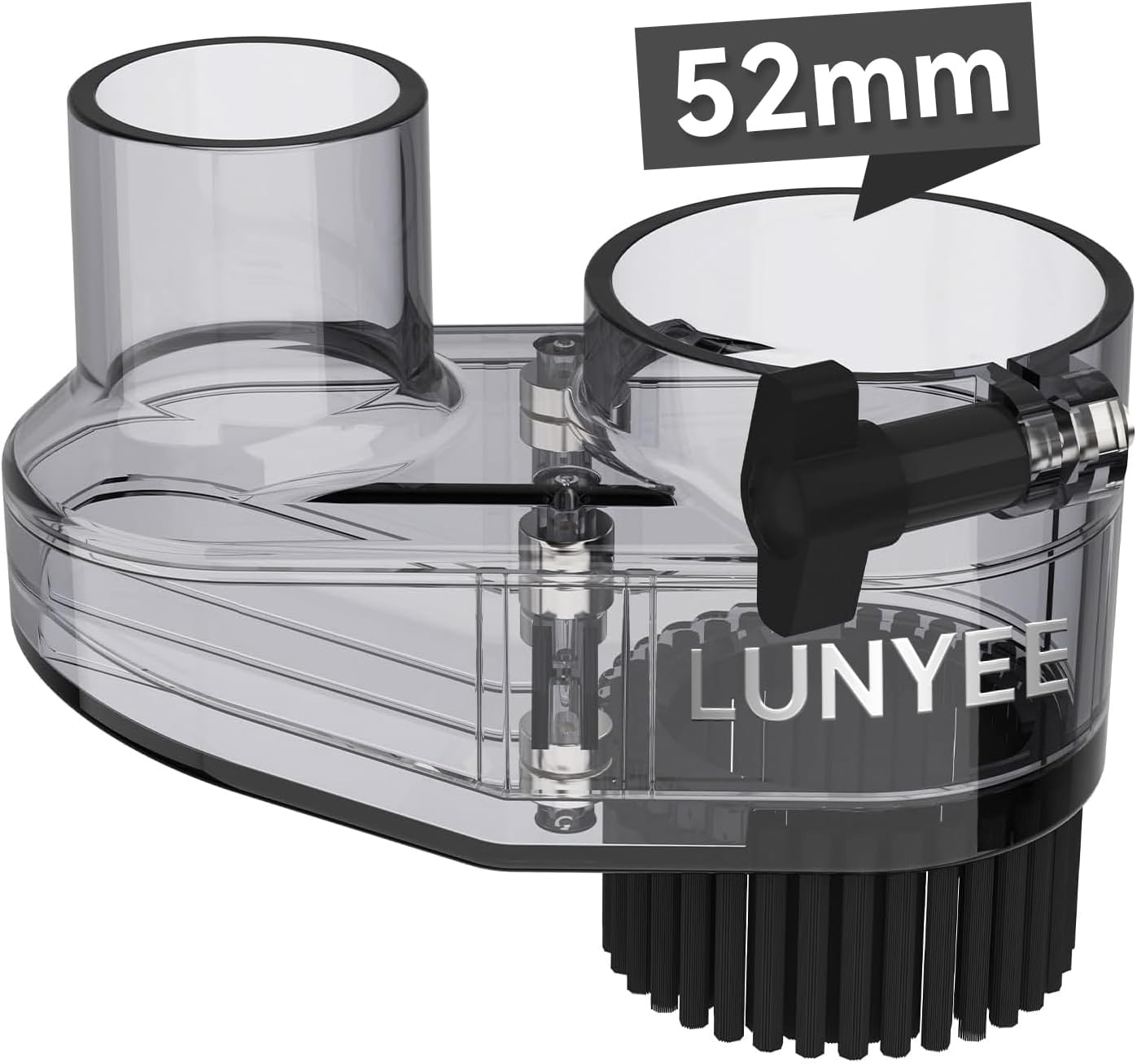
A clear ABS dust shoe that clamps around a 52 mm spindle, hangs a 23 mm nylon brush around the bit and pulls MDF dust and pine chips into a 38 mm vacuum hose.
Dust shoes are sized by the spindle they wrap, and this one wraps 52 mm. That single number decides whether it fits a given 3018, more than the frame's name does.
A stock 3018-PRO, PROVer or MX3 carries a 775 motor, which needs a 42 mm shoe. LUNYEE names those frames because many of them get upgraded, and a 52 mm body is the common size for the 300 to 500W spindles fitted in their place. Measure the spindle body with calipers before ordering: if it reads 52 mm, the shoe fits; if it reads close to 42 or 43 mm, it does not.
The usual routes to a 52 mm spindle on a 3018 frame:
LUNYEE also lists FoxAlien's Masuter Pro and Masuter 4040, larger machines that use a 52 mm spindle. The shoe weighs 8.4 ounces, light enough that it does not burden a stepper-driven Z on a desktop frame.
| Spec | Value |
|---|---|
| Brand | LUNYEE |
| Spindle diameter | 52 mm |
| Hose adapter | 38 mm |
| Body material | Transparent ABS |
| Brush | 23 mm nylon |
| Construction | Three-piece, magnetic joints |
| Bit change | Bottom cover pops off, no tools |
| Installation | Three steps |
| 3018 frames named | 3018-PRO, 3018-PROVer, 3018-PROVer Mach3, 3018-MX3 (with a 52 mm spindle) |
| Other machines named | FoxAlien Masuter Pro, Masuter 4040 |
| Power | None needed |
| Weight | 8.4 oz (about 240 g) |
| Package size | 5.71 × 5.31 × 3.9 in |
MDF is the reason most 3018 owners go looking for a dust shoe. It cuts into a fine powder rather than chips, and that powder hangs in the air, coats the rails and packs into the lead screws.
The shoe puts a brush skirt around the bit and a 38 mm hose port on top. With a shop vacuum running, air is pulled in under the brush and carries dust up and out before it spreads. A clear ABS body means the bit stays visible, which matters on a 3018 where you often watch the first pass to check depth.
How different materials behave under the shoe:
| Material | What comes off | How the shoe helps |
|---|---|---|
| MDF | Fine powder | Captures most of it at the source |
| Pine and plywood | Chips and dust | Keeps the cut line clear for the next pass |
| Cast acrylic | Curly chips that cling | Pulls chips out of the slot before they re-melt |
| Soft aluminium | Small sharp chips | Clears the slot; skip it if cutting with liquid |
Clearing chips also helps the cut itself. A slot packed with pine chips makes the bit recut them, which heats the edge and dulls it faster. Keeping the slot empty lets each flute take fresh material.
A shoe cuts dust at the source but does not make MDF dust harmless. Wear a mask rated for fine dust while cutting it, shoe or not.
The shoe comes apart in three magnetic pieces. For a bit change, only the bottom cover comes off, so the body stays clamped around the spindle and the hose stays connected.
That split design saves time on jobs with several tools, like a sign roughed with a flat end mill and finished with a V-bit. Pull the bottom cover off by hand, change the bit, set Z with a probe, and snap the cover back on. No screwdriver, no hose to refit.
The magnets have a second benefit. If the brush catches a clamp during a rapid move, the cover can pop off instead of dragging the spindle or bending a bracket. A cover on the spoilboard is a small price for a Z-axis that stays square.
The 23 mm nylon brush is shorter than the 40 mm brush on Genmitsu's 42 mm shoe. That suits the 1/8-inch bits and short V-bits that dominate 3018 work:
Set the brush height with the bit at its deepest cut. The bristles should just touch or nearly touch the stock; if they splay flat, the shoe drags and the brush wears fast.
Clamps need thought too. A shoe widens the footprint around the bit, so low-profile side clamps work better than tall hold-downs.
Choosing a dust shoe is really choosing a spindle diameter. The frame matters less than what sits in the Z-axis mount today and what will sit there next year.
Two shoes cover most 3018 builds:
| Feature | LUNYEE 52 mm | Genmitsu 42 mm |
|---|---|---|
| Spindle | 52 mm (300–500W class) | 42 mm (775 motors) |
| Hose port | 38 mm | 38 mm (1.5 in) |
| Brush | 23 mm nylon | 40 mm nylon, 20 mm cover available |
| Build | Clear ABS, three pieces | Clear ABS, two pieces |
| Bit change | Pop off the bottom cover | Pop off the bottom cover |
Pick the LUNYEE shoe if the spindle measures 52 mm now. Pick the Genmitsu shoe if the machine still runs a 775, including a 20,000 rpm GS-775M, since those share the 42 mm body.
If you plan to move to 52 mm soon, the mount comes first. The Genmitsu Aluminum Z-Axis Assembly V2 for the 3018-PRO holds both sizes and raises effective Z range from 40 to 56 mm, while the Srliya 52 mm mount is a direct bracket swap.
A shoe also changes how clean the rails stay. With dust pulled away at the bit, less of it settles on the Y rails and the lead screws, which means fewer gritty moves and less cleaning before the next job. On a desktop frame that shares a room with a computer, that alone justifies the part.
The full upgrade sequence is in the 3018 upgrades logbook.
Only after a spindle upgrade. The stock 775 motor needs a 42 mm shoe; this one clamps around a 52 mm spindle.
The hose port is 38 mm, so a 38 mm hose connects directly and other sizes need a reducer.
Pull off the magnetic bottom cover by hand, change the bit, and snap the cover back. No tools are needed.
23 mm of nylon bristle, shorter than the 40 mm brush on Genmitsu's 42 mm shoe.