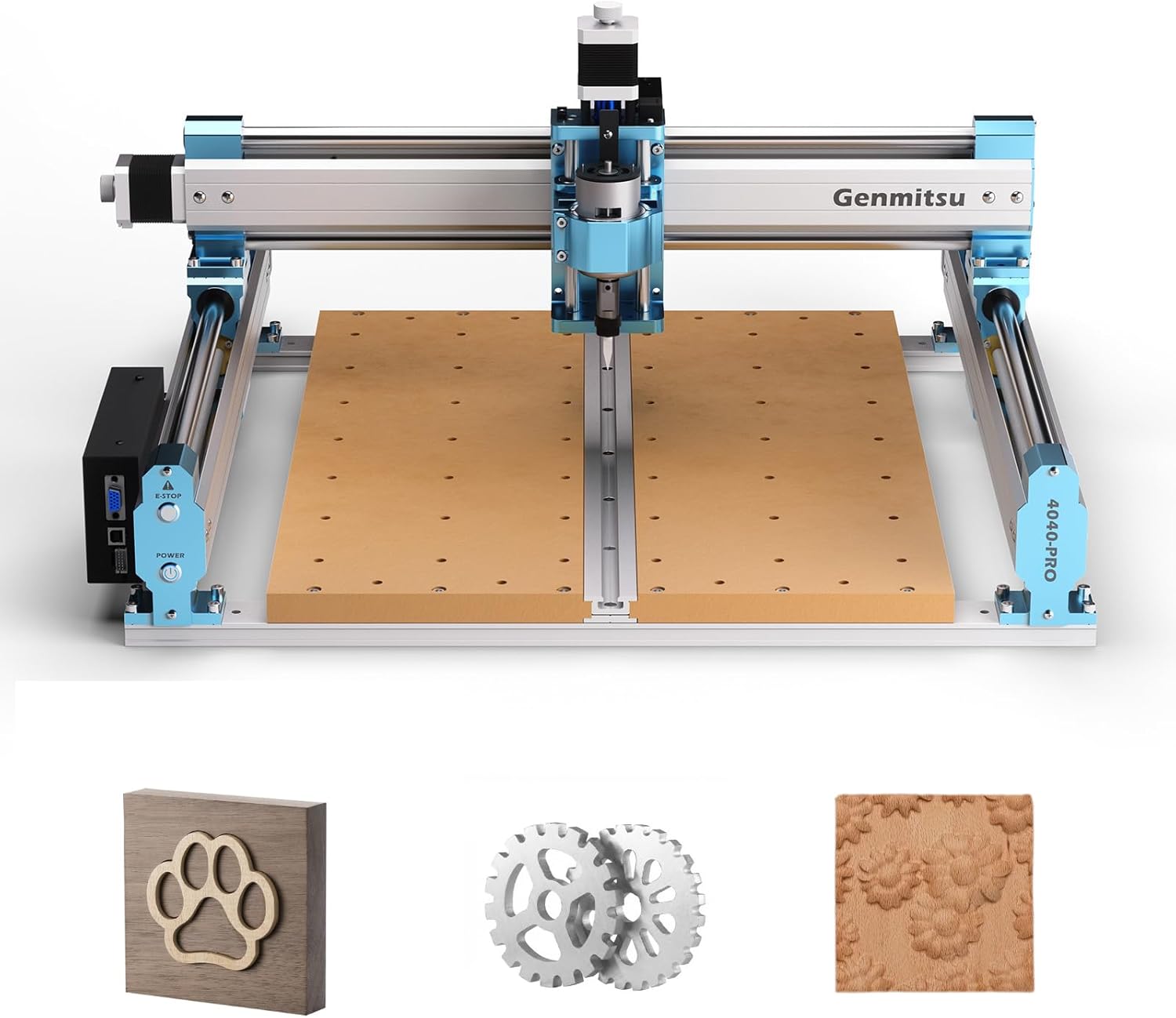
- 300 × 180 × 45 mm
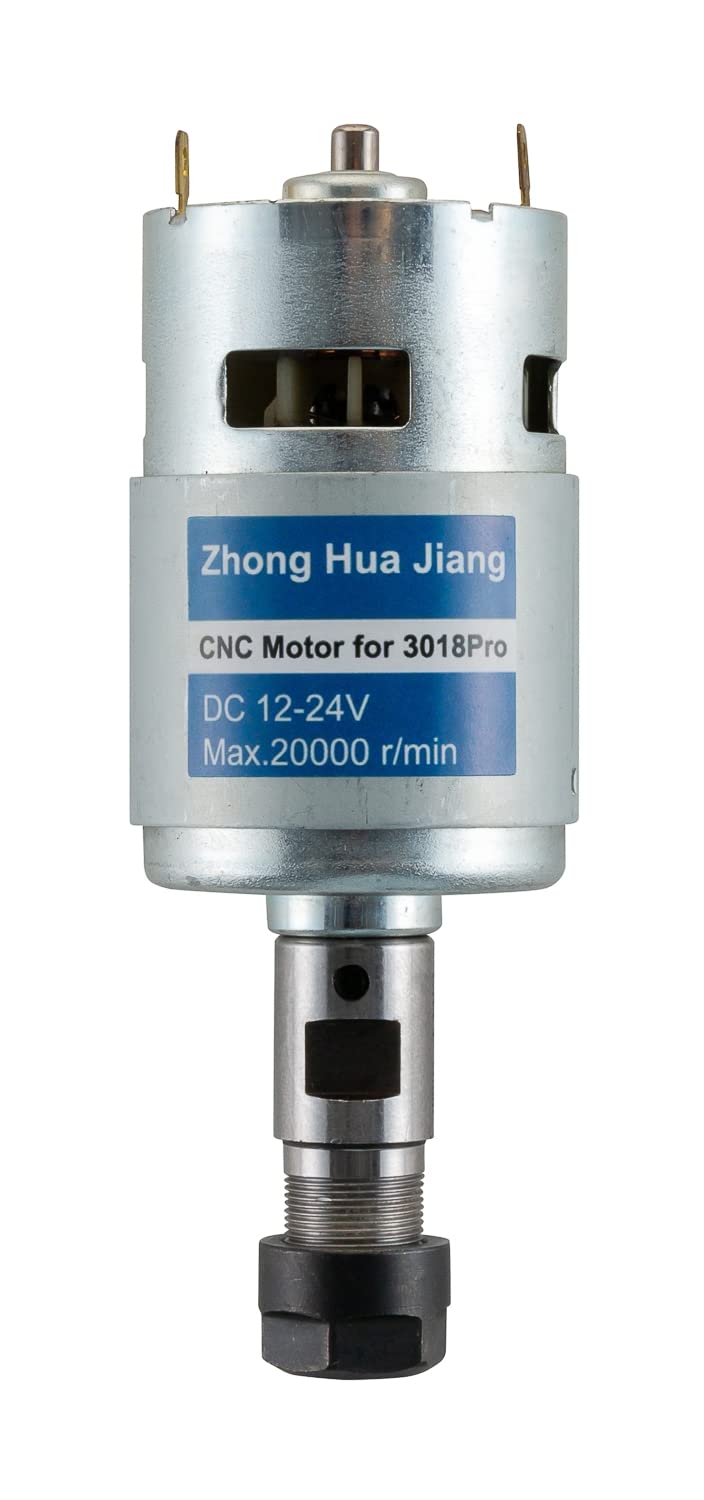
- 775 brushed spindle, ER11 collet
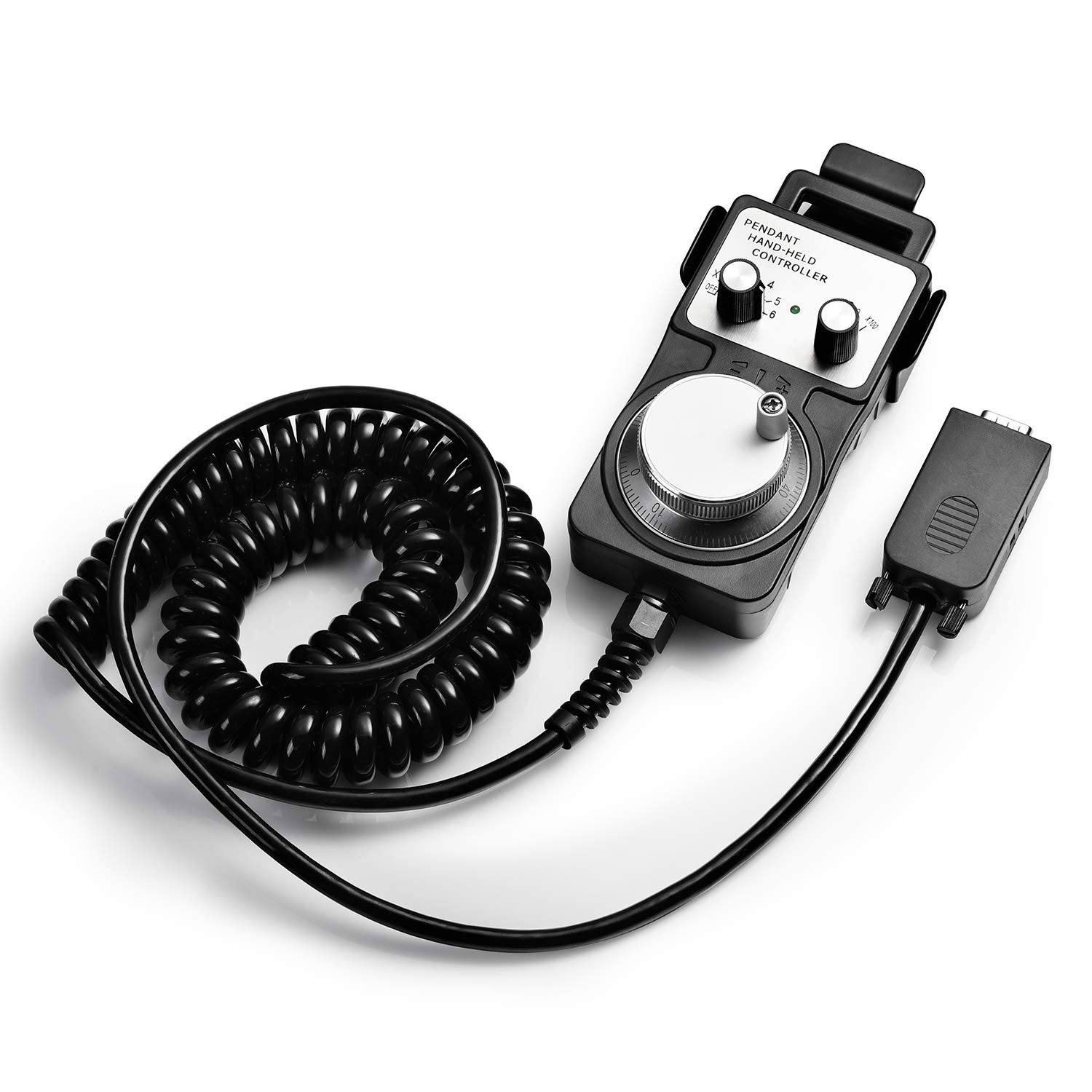
- Offline controller: runs without a PC
A 300 × 180 mm router that fits on a desk and runs on GRBL. Start with the 3018-PRO kit most owners choose, the TTC3018 Pro with its all-metal Z, or the lower-cost TTC3018.
Ordered by last month's sales · logged September 2026
A 3018 CNC machine is a three-axis desktop router named after its travel: roughly 300 mm in X and 180 mm in Y, with 40 to 80 mm of Z depending on the frame. A spinning end mill on a GRBL-driven gantry carves, engraves and cuts flat stock, one shallow pass at a time.
Every 3018 shares the same bones. Stepper motors drive the bed and gantry along guide rods on T8 lead screws, a third motor lifts the spindle, and a small controller board turns G-code into step pulses. Nema17 steppers are the norm, the same size as in most hobby 3D printers. The same frame goes by 3018 CNC engraving machine, 3018 CNC carving machine or desktop CNC 3018 machine, built as one open design by many makers.
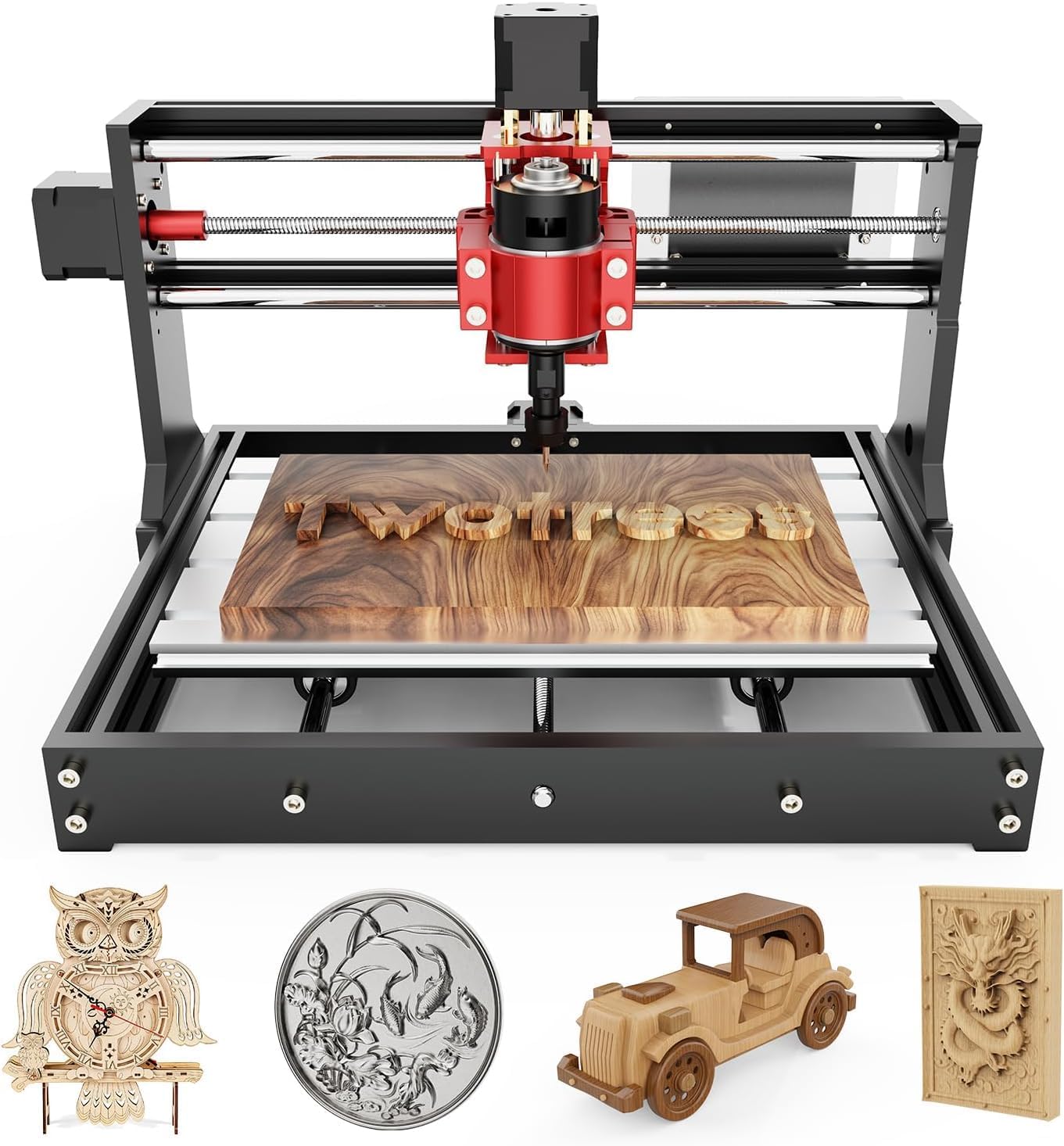
The three most bought machines split along clear lines. The Genmitsu 3018-PRO kit pairs a 300 × 180 × 45 mm work area with an offline controller, so a job can run from a card with no laptop attached. The Twotrees TTC3018 Pro swaps the usual moulded Z carriage for an all-metal one on a T8 anti-backlash screw. The plain Twotrees TTC3018 keeps the 775 spindle and ER11 collet at the lowest cost of the three.
Harder stock stays off the list: steel, glass, stone and ceramics ask more than a small brushed motor on slim rods can give. The materials and first cuts entry covers those limits and some starter projects. PCB traces and soft aluminium already sit at the edge of what the 775 kits do comfortably.
Why it suits the job: The most bought 3018: a 300 × 180 × 45 mm GRBL kit that ships with an offline controller.
Material decides the frame more than any other factor. Plywood forgives a flexible gantry; 6061 aluminium punishes one with chatter, snapped bits and a rough floor.
| First material | What the frame needs | Machine to start with |
|---|---|---|
| Plywood, MDF, signs | Any 3018; 45 mm of Z is plenty | Genmitsu 3018-PRO |
| PCB traces, V-bit lettering | A steady Z with little backlash | Twotrees TTC3018 Pro |
| Wood on a tight budget | 775 spindle, ER11 collet | Twotrees TTC3018 |
| Occasional aluminium or brass | 500W spindle, all-metal frame | LUNYEE 3018 Pro Max |
| Weekly aluminium work | A linear guide on X | LUNYEE 3018 Pro Ultra |
| Milled blank, lasered lettering | A laser module in the kit | 3018-PRO with 5W laser |
Next, weigh what arrives in the box. Three extras shape the first week more than spindle watts do:
The Genmitsu 3018-PROVer V2 ships with all three, plus a one-piece aluminium spoilboard and a pre-assembled gantry. The 3018-PRO kit trades them for an offline controller; the probe and switches bolt on later through ports its board already has.
A laser plan needs a matching board. CNCTOPBAOS boards take 12V three-pin modules from 0.5W to 20W, and the 3018-PRO bundle with a 5W module in the box skips the search for a compatible head altogether.
Anyone already running a 3018 can skip new frames and go after the part that fixes a specific pain, from Z zeroing to stock that creeps mid-cut. For kit against kit, the 3018-PRO kits compared entry sets every spindle, Z height, offline controller and kit bundle side by side.
Genmitsu 3018-PRO CNC Router Kit |
Twotrees TTC3018 CNC Router |
Twotrees TTC3018 Pro CNC Router |
Genmitsu 3018-PROVer V2 CNC Router |
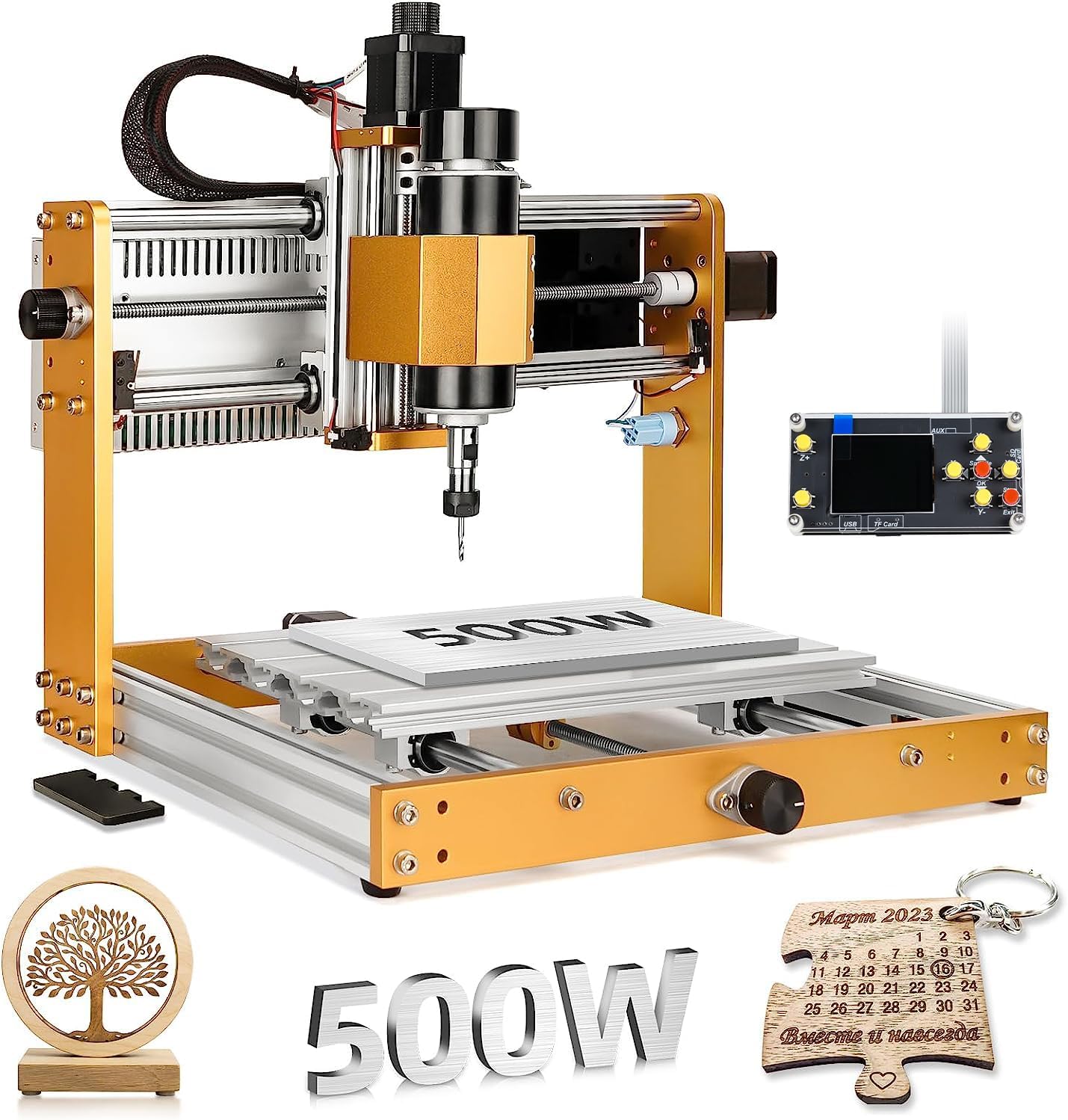
LUNYEE 3018 Pro Max 500W CNC Router |
CNCTOPBAOS 3018-PRO CNC Router | |
| Type | Machine | Machine | Machine | Machine | Machine | Machine |
| Spindle | 775 spindle | 775 spindle | 775 spindle | 775 spindle | 500W spindle | 775 spindle |
| Work area | 300 × 180 × 45 mm | 300 × 180 × 40 mm | 300 × 180 × 40 mm | 284 × 180 × 41 mm | 300 × 180 × 80 mm | 300 × 180 × 45 mm |
| Frame | Aluminium + plastic | Aluminium + plastic | All-metal | All-metal | All-metal | Aluminium + plastic |
| Linear guides | No | No | No | No | No | No |
| Offline controller | Yes | Not included | Not included | Not included | Yes | Yes |
| Get it here | Get it here | Get it here | Get it here | Get it here | Get it here |
Six spec columns separate one 3018 from the next, and most trace back to two parts: the spindle and the Z assembly. Everything else follows from how much cutting force those two can hold steady.
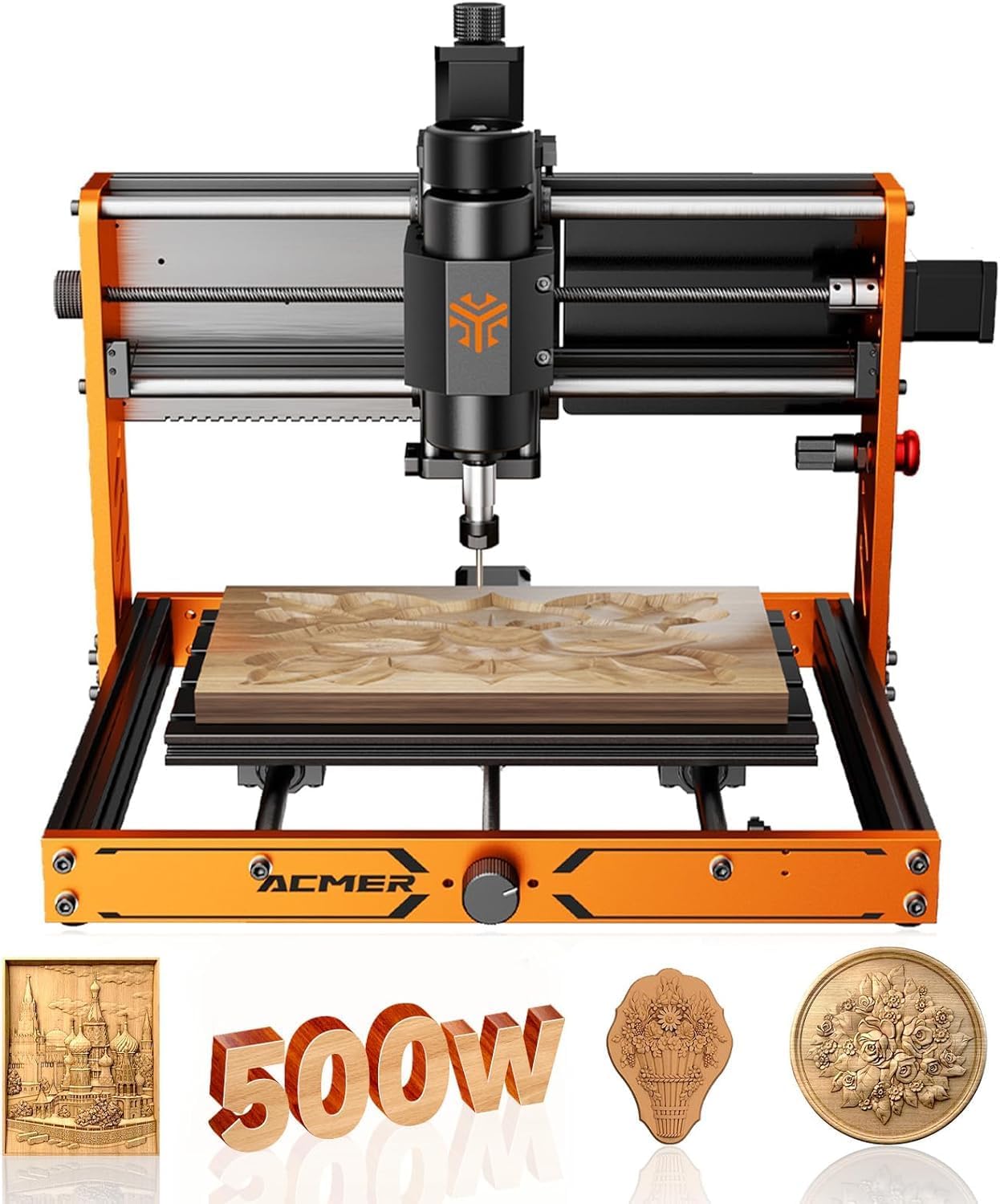
The stock 775 is a brushed DC can motor a little over 40 mm across, clamped in a holder and fitted with an ER11 collet. Twotrees runs its 775 at 7,000 to 9,000 rpm; CNCTOPBAOS rates its version at 120W and 10,000 rpm on 24V. The 500W spindles on the LUNYEE Pro Max, the WolfPawn 500W and the ACMER Ascarva 3S reach 12,000 rpm and sit in 52 mm holders.
| Spec | 775 frames | 500W frames |
|---|---|---|
| Spindle top speed | 7,000–10,000 rpm stock | Up to 12,000 rpm |
| Holder diameter | 42–43 mm | 52 mm |
| Z travel | 40–45 mm | 60–80 mm |
| Frame | Aluminium profile, often a moulded Z | All-metal |
| Examples | 3018-PRO, TTC3018, CNCTOPBAOS 3018-PRO | LUNYEE Pro Max, WolfPawn 500W, ACMER Ascarva 3S |
Z travel matters less for depth of cut than for clearance. The 80 mm Z on the Pro Max clears a vise, a tall clamp or a thick hardwood blank. A 40 mm Z, as on the TTC3018, limits work to thin sheet once bit and collet hang below the holder.
Rigidity is the quiet column. These are the signs of a stiffer frame:
More power on a flexible frame only turns into louder chatter. The 3018 Pro Max comparison sets the 500W frames against each other.
A 500W spindle, an all-metal frame and 80 mm of Z travel give it the stiffness a 775 motor lacks in soft metal. Six limit switches, an E-stop and an offline controller come in the box.
Get it here
The 3018-PROVer V2 arrives with limit switches, an E-stop and a Z-probe on a one-piece aluminium spoilboard. Its gantry comes pre-assembled, so the first cut can happen the same evening.
Get it here
The 3018-PRO kit with a 5W diode laser module in the same box: mill a sign blank, swap heads, then burn the lettering. GRBL drives both heads.
Get it here
A touch plate and clip that set Z zero in seconds, with no paper-slip guessing. Made for GRBL and Mach3, and one of the most bought 3018 parts.
Get it hereEach material has its own habits on a 3018, and the right starting pass depends on the bit, the spindle and how tight the frame is. The figures here are common starting points for a 1/8-inch shank bit, meant to be nudged up or down after a test cut in scrap.
| Stock | Bit | Depth per pass | Feed to start |
|---|---|---|---|
| Birch plywood, MDF | 2-flute flat end mill | 0.5–1 mm | 300–600 mm/min |
| Cast acrylic | Single-flute O-flute | 0.3–0.5 mm | 300–500 mm/min |
| FR4 copper board | 20–30° V-bit | 0.05–0.1 mm | 100–200 mm/min |
| 6061 aluminium | Single-flute end mill | 0.1–0.2 mm | 100–200 mm/min |
| Brass | Carbide end mill, 1 or 2 flutes | 0.1–0.2 mm | 100–200 mm/min |
Plywood is the forgiving start. Watch for tear-out on the top veneer and for glue lines, which dull bits faster than the wood around them. A down-cut bit leaves a cleaner face on signs.
Hardwoods such as maple and walnut sit between plywood and acrylic. Shallower passes than plywood and a sharp bit keep scorch marks off the edges.
Cast acrylic cuts clean as long as chips leave the groove. Extruded sheet melts and welds shut behind the bit. When a gummy ribbon fills the slot, raise the feed or drop the rpm so each flute takes a real chip.
Machines are only a slice of 3018 gear. The rest is parts: spindles, laser modules, Z assemblies, spoilboards, controllers, switches, clamps and dust shoes, each aimed at one weak spot of the stock kit.
The order to add them follows the problems a new owner meets, not the size of the upgrade:
Two more groups change what the machine does rather than how well it does it. Diode laser modules from 5W to 10W bolt into the spindle holder and take PWM from the same board. A rotary module turns pens and handles on the PROVer V2, holding pieces up to 40 mm across and 184 mm long.
Then come the comfort parts:
The upgrades in order of payoff entry takes each part in turn, with fit checks for the Genmitsu, Twotrees and LUNYEE frames.
68 machines, spindles, lasers, beds and switches, grouped by the job they do. Open one for fit notes and its full spec log.
Parts from one 3018 maker often fit another maker's frame, though not always. Four measurements settle it before any bolt goes in.
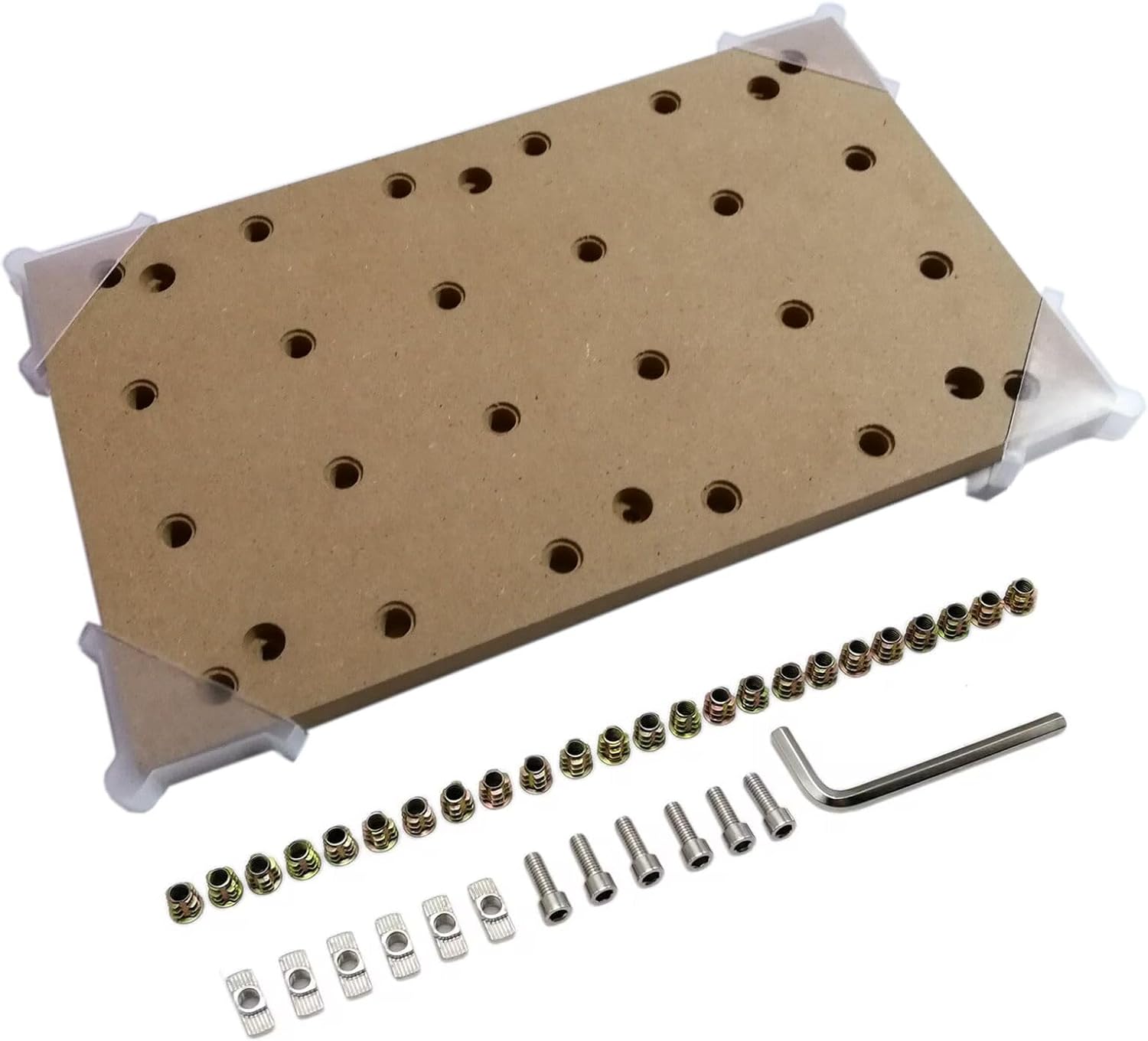
Genmitsu splits its own line in two. The 3018-PRO and 3018-MX3 share one Y-axis extension kit; the 3018-PROVer V2 takes a different kit that adds 220 mm of Y travel for 420 mm in total. The T-slot 3040 aluminium spoilboard fits the 3018-PRO but not the PROVer V2.
| Part | Fits | Check first |
|---|---|---|
| GS-775M 20,000 rpm spindle | Most 3018s | 24V board, 42–43 mm holder |
| LASER TREE 10W module | 3018 and 3018-PRO mounts | 3-pin VCC/GND/PWM plug, 12V input |
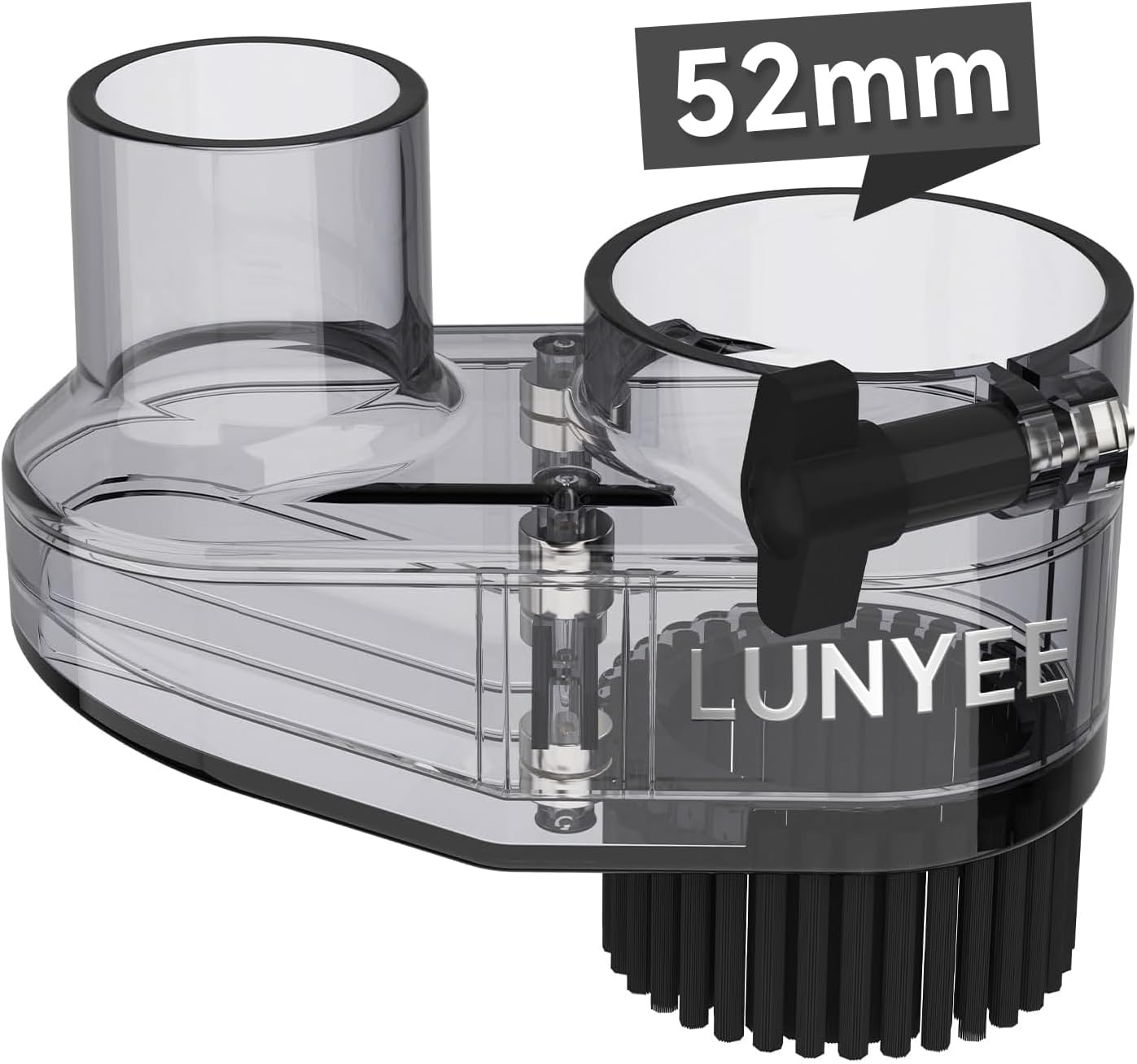
| Genmitsu 42 mm dust shoe | Most 3018s | 42 mm motor with two 4 mm screw holes |
| Fafeicy vacuum table | 3018 Pro Ultra, Pro Max | M6 screws or T-slot nuts |
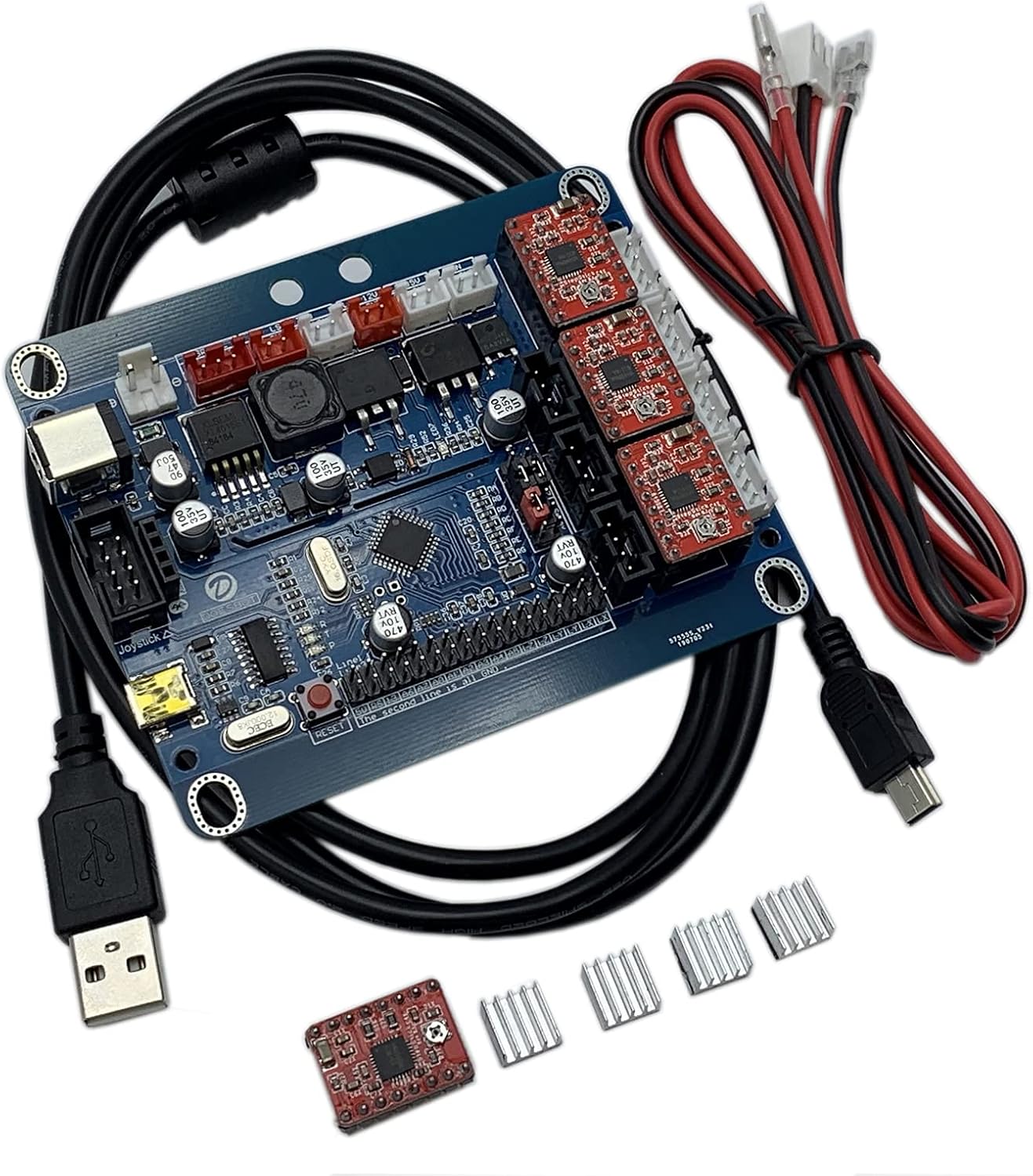
Controller boards follow the same logic. A replacement GRBL 1.1 board has to match the stepper drivers, the 24V input and the laser header of the machine it replaces; the MKS DLC32 V2 adds a 32-bit chip, Wi-Fi and a touch screen in one kit.
Twotrees, CNCTOPBAOS, RATTMMOTOR, VEVOR and LUNYEE frames all speak GRBL, so senders and CAM files carry across. The every 3018 maker entry traces which frames share parts.
Every 3018 job runs through the same chain: a drawing becomes a toolpath, the toolpath becomes G-code, and a sender streams that code over USB to GRBL on the controller board. Learn the chain once and it covers every machine in the range.
GRBL keeps its own settings, listed with the $$ command: steps per millimetre, maximum rates, acceleration and whether homing is on. Kits arrive set for their own screws and motors, so those values can stay alone until a part measures wrong. Once homing works, GRBL's soft-limits setting stops any job that would run past the travel.
Bench rules for a desk router stay short:
The 3018 software setup entry walks through Candle, UGS and LaserGRBL, and the laser module guide covers diode heads from 5W to 10W.
Wood, MDF, plywood, acrylic, PVC, HDPE, copper-clad PCB and, in light passes, soft aluminium, brass and copper. Steel, glass, stone and ceramics are beyond its frame and spindle.
Yes, in shallow passes of around 0.1–0.2 mm with a single-flute bit and a little lubricant. A 500W all-metal frame such as the LUNYEE 3018 Pro Max handles it far better than a 775-spindle kit.
A CAD/CAM program to make G-code, such as Easel, Carveco or Fusion 360, and a sender to stream it to GRBL, such as Candle or Universal Gcode Sender. LaserGRBL drives a laser module.
About 300 × 180 mm in X and Y. Z runs from 40–45 mm on 775 kits to 80 mm on the Pro Max and Pro Ultra, and Y-extension kits stretch the bed toward 300 × 400 mm.
Yes. Most 3018 boards drive a 3-pin diode module by PWM, and 5W to 10W modules fit the spindle holder. Wear goggles rated for 450 nm whenever it fires.
The PROVer V2 arrives with limit switches, an E-stop and a Z-probe on a pre-assembled gantry. The 3018-PRO costs less and includes an offline controller; both run GRBL and the same software.