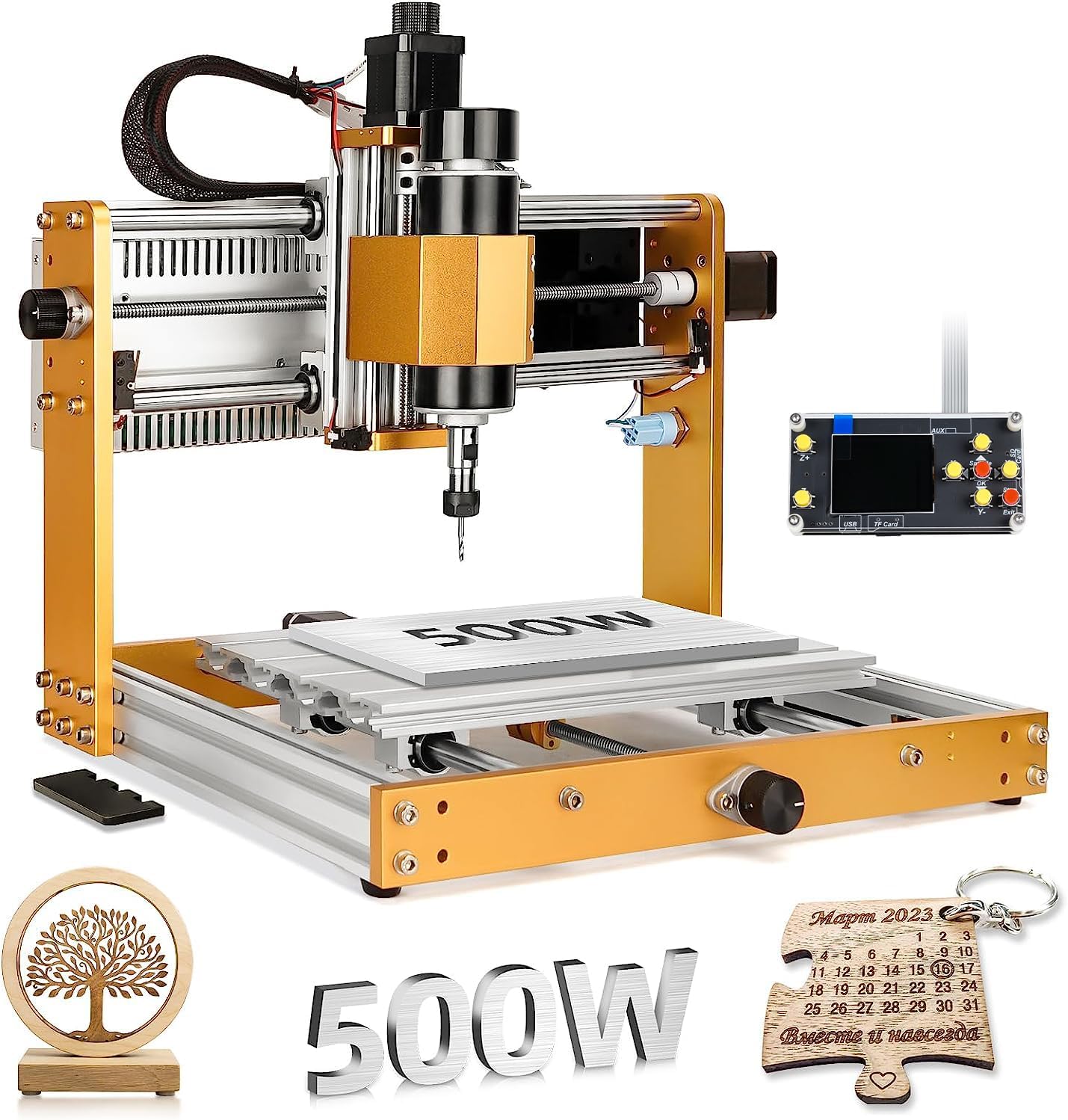
- 300 × 180 × 80 mm
- 500W spindle motor
- All-metal frame
The Pro Max's 500W spindle and 80 mm of Z, moved onto a stiffer frame: an HGH15 linear guide on X, 4040 profiles under Y and a one-piece aluminium bed with a printed scale.
The LUNYEE 3018 Pro Ultra is a 3018 in footprint and work area, 300 × 180 mm, but not in build. It takes the 500W spindle and 80 mm of Z from LUNYEE's Pro Max and puts them on a stiffer frame, with a linear guide where most 3018s have round rods.
LUNYEE aims it at metal. Its own list starts with brass, copper and 6061 aluminium, for drilling and engraving, and then runs through the softer materials every 3018 handles:
A 500W spindle changes the working rhythm more than the material list. A 120 W 775 slows and loses speed as the bit loads up; a 500W motor holds its speed through a deeper pass, which keeps the chip load steady and the finish cleaner in hardwood.
The 80 mm of Z helps just as much. It leaves room for a machine vise, a thick blank and a long-reach bit at the same time, which a 45 mm Z machine cannot fit.
The LUNYEE Pro Ultra rundown covers the linear rail and aluminium pocketing in depth, and the Pro Max comparison covers its sibling.
| Spec | Value |
|---|---|
| Brand | LUNYEE |
| Model | 3018 Pro Ultra |
| Spindle | 500W (0.67 hp) |
| Working area | 300 × 180 × 80 mm (11.8 × 7.1 × 3.1 in) |
| Z-axis height | 80 mm |
| X-axis guide | HGH15 linear guide |
| X-axis profiles | 2040 aluminium |
| Y-axis profiles | 4040 aluminium |
| Frame | All-metal |
| Worktable | One-piece machined aluminium plate with a measurement scale grid |
| Clamps in the box | 2 T-track mini hold-down clamps |
| Power supply | Integrated switching power supply |
| Safety | Limit switches on X, Y and Z; emergency-stop switch |
| Control | GRBL, with offline controller |
| Assembly | Main parts pre-assembled, organised cabling, paper manual and videos |
| Materials named | Brass, copper, 6061 aluminium, wood, acrylic, MDF, plastic, PCB |
| Weight | 14 kg |
| Colour | Yellow |
The Pro Ultra's worktable is a one-piece machined aluminium plate with a measurement scale printed across it. LUNYEE's point is flatness and strength, and the scale makes lining up stock quicker.
Squaring a blank usually means a fence, a set square or an edge-finding routine. With a scale on the bed, a sheet of acrylic or a plywood blank can be set against two lines and started, and the offset read off the grid when you set the work zero.
The bed arrives with clamps. LUNYEE puts two T-track mini hold-down clamps in the box, which is enough to hold a blank at both ends from day one.
The frame under the bed is the other half. X runs on an HGH15 linear guide over 2040 profiles, and Y rides on 4040 profiles, heavier than the 2040 extrusions most 3018s use. LUNYEE says this cures the Z-axis wobble common to desktop machines, and the extra section and profile rail point in that direction.
For extra holding, the LUNYEE tiger claw side clamps and a second set of LUNYEE mini hold-downs are both drawn for this bed.
The Pro Ultra ships with the full safety and control kit that a basic 3018 leaves as add-ons. Limit switches sit on all three axes, an emergency-stop switch is on the machine, and an offline controller runs jobs without a computer.
Setup is shorter than on a bare kit. The main parts arrive pre-assembled with organised cabling, and the switching power supply is integrated into the machine instead of hanging off it as a separate brick. LUNYEE supplies assembly videos and a paper manual.
Limit switches earn their place in two ways. They stop an axis that runs past its travel, and they let GRBL home to a repeatable machine zero, so a job that stops halfway can resume from the same coordinates.
The offline controller suits a machine in a garage: copy the G-code to its card, set zero with the jog buttons, and start. A GRBL sender such as Candle or UGS over USB suits jobs you want to watch and adjust; the 3018 software rundown compares them.
Three machines sit close to the Pro Ultra, and each answers a different priority: less outlay for the same spindle, a different controller, or a bigger bed.
| Machine | Spindle | Work area | Frame and guides |
|---|---|---|---|
| LUNYEE 3018 Pro Ultra | 500W | 300 × 180 × 80 mm | All-metal, HGH15 on X, 4040 Y |
| LUNYEE 3018 Pro Max | 500W, 0–12,000 rpm | 300 × 180 × 80 mm | All-metal, 12 mm round rods |
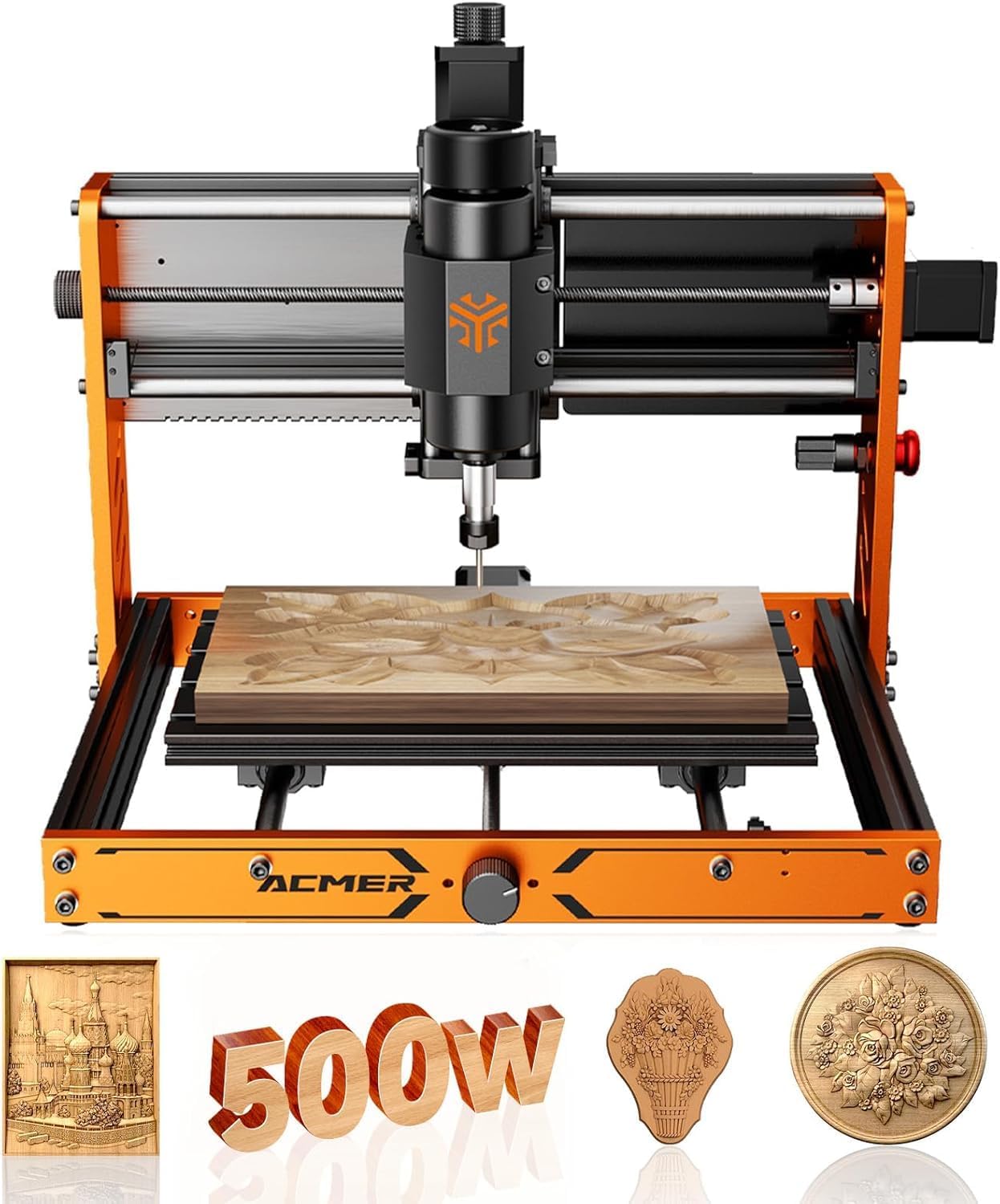
| ACMER Ascarva 3S | 500W, 48 V, 12,000 rpm | 300 × 180 × 78 mm | Aluminium, ESP32 board |
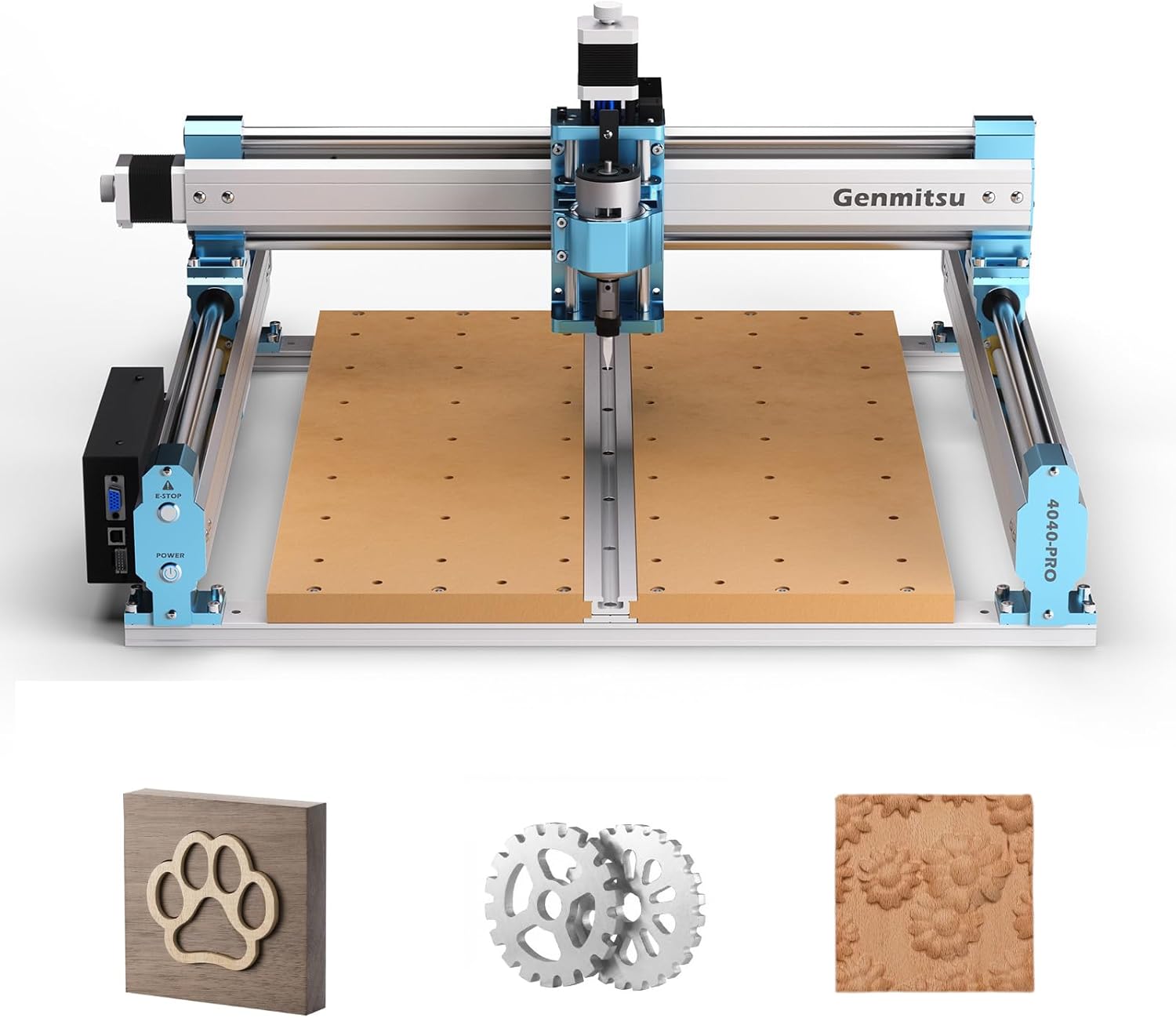
| Genmitsu 4040-PRO | Separate class | 400 × 400 mm class | Larger machine for metal and acrylic |
The Pro Max is the closest relative: same spindle, same Z, same all-metal idea, but on round rods and without the linear guide or the heavier Y profiles. For mostly wood it covers most of the same jobs. For brass, copper and aluminium, the Ultra's stiffer X is the reason to pay more.
The ACMER 3S adds a tool setter, a parameter table and an ESP32 board that talks to Windows, macOS or Linux. The 4040-PRO trades the desktop footprint for a bed more than twice the size.
Accessories overlap across the LUNYEE pair as well. The tiger claw and mini hold-down clamp sets name both the Pro Max and the Pro Ultra, so clamps bought for one machine move to the other.
Checks before ordering: your parts fit 300 × 180 mm, your bench carries 14 kg without flexing, and you have a sacrificial board planned for the aluminium bed.
An HGH15 linear guide on X, 2040 X profiles and heavier 4040 Y profiles, a one-piece scale-grid aluminium bed, an integrated power supply and two clamps in the box.
LUNYEE names brass, copper and 6061 aluminium for drilling and engraving. Keep passes light and bits sharp; it is still a desktop machine.
300 × 180 × 80 mm, the standard 3018 bed with 80 mm of Z.
No. It ships with an offline controller, and it also runs from GRBL software over USB.
About 14 kg, so a sturdy bench helps.